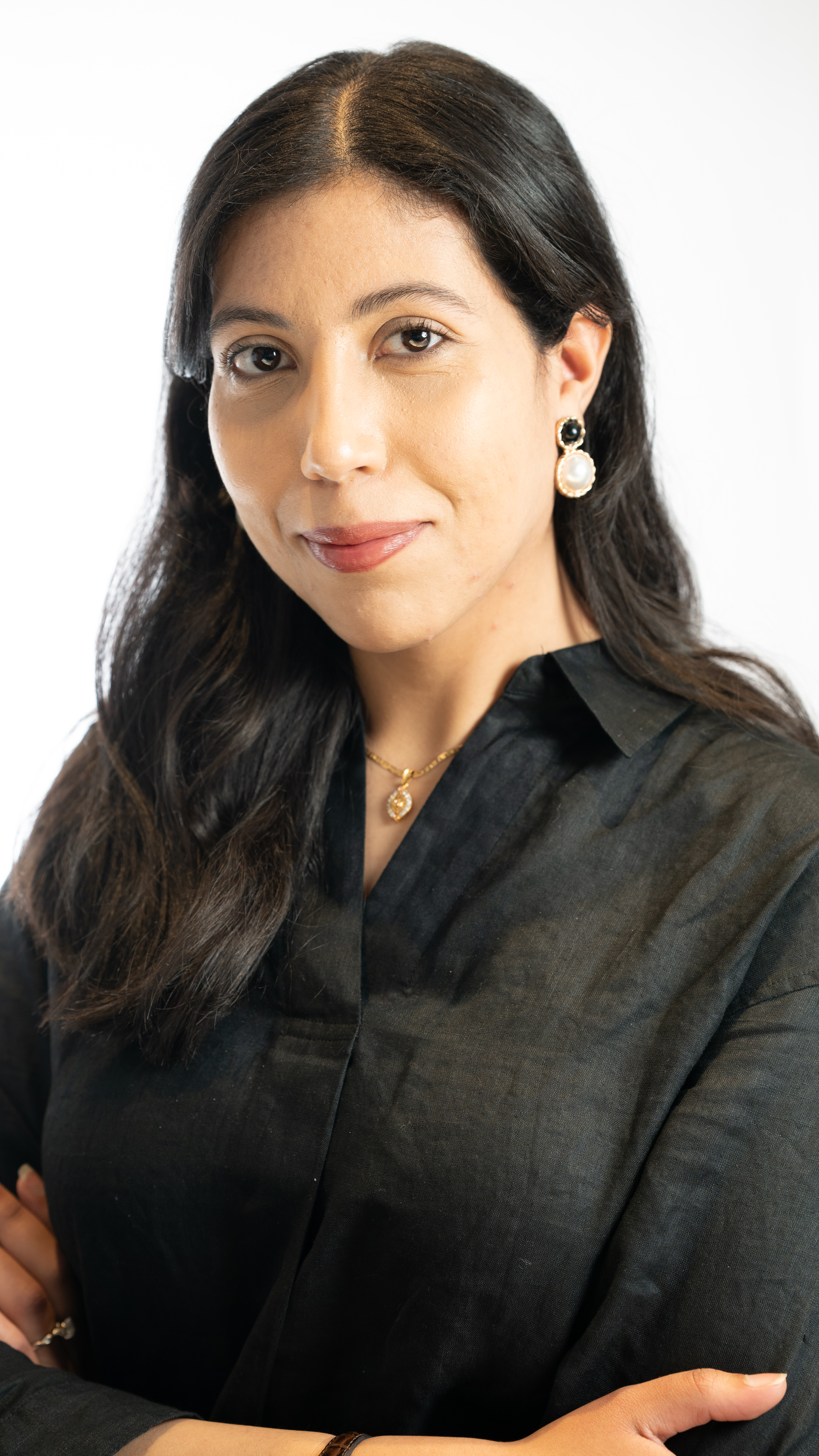
Interview with Oumaima Moutayb from University Cadi Ayyad (Morocco), on her secondment under the supervision of prof. Jacques Noël.
First of all, can you tell us more about yourself? Where are you from, what is your university background?
My name is Oumaima MOUTAYB, and I am a PhD candidate in neuroscience at Cadi Ayyad University in Marrakech, Morocco. My interest in neuroscience began during my undergraduate studies in animal physiology, and I later earned a Master’s degree in Neuroscience and Biotechnology through the international EMN program.
My current research focuses on neuroimmune mechanisms underlying chronic osteoarthritis pain, particularly the role of microglia (the brain’s resident immune cells) in supraspinal plasticity. Through my work, I aim to better understand how neuroinflammatory processes in higher brain regions contribute to the persistence of chronic pain.
Why did you choose this career path? What is your interest about science?
One quote that has always resonated with me is from Marie Curie: “Nothing in life is to be feared, it is only to be understood.”
In many ways, this quote reflects how my interest in science began. For me, science is not only a profession, it is a way to illuminate the doubts and questions that naturally arise in our lives. The more we understand, the more questions we ask, and this continuous search for knowledge helps make sense of the world around us.
From a young age, I was fascinated by questions about human emotions and thoughts. Why does thinking about something change how we feel? How do emotions and cognition interact? This curiosity gradually led me to explore the brain and its complexity. Later, during my studies, I became particularly interested in understanding why some individuals develop conditions such as chronic pain while others do not, and how the brain interprets and adapts to signals coming from the body. This curiosity eventually led me to pursue research in neuroscience, focusing on how peripheral inflammation can reshape brain circuits and contribute to persistent pain.
Coming from Morocco, where resources for managing chronic pain can be limited, I felt a strong motivation to contribute through research, both to improve awareness of brain health and to help advance more effective therapeutic approaches. For me, science began as a way to understand the world, but it has become a way to contribute to improving it.
Can you tell us more about your mobility? Where did you go, for how long? On what kind of research were you working on? Who did you work with?
During my PhD, I had the opportunity to undertake a research mobility at the Institut de Pharmacologie Moléculaire et Cellulaire (IPMC) in Valbonne for one year. I worked there under the supervision of Pr. Jacques Noël, in collaboration with my home institution, Cadi Ayyad University in Marrakech.
The objective of this mobility was to deepen my research on the central mechanisms underlying chronic pain associated with osteoarthritis. In particular, my work focused on the role of central microglia, and their involvement in neuroinflammatory processes that can reshape brain plasticity during chronic pain conditions. By investigating how persistent peripheral inflammation may influence microglial activity in key brain regions involved in pain processing, the project aims to better understand the mechanisms that drive the transition from acute to chronic pain and contribute to pain-related comorbidities, such as cognitive and emotional alterations frequently observed in chronic pain patients.
This experience allowed me to work in a highly multidisciplinary and international research environment while significantly strengthening my technical expertise. In particular, I developed advanced skills in microscopy and neuroimaging, including confocal microscopy for high-resolution visualization and 3D reconstruction of cellular structures in the brain. I also gained extensive experience in image processing and semi quantitative analysis.
Beyond the technical aspects, this mobility significantly expanded my skills and perspectives, enhancing both my personal growth and the development of my PhD project.
Same question, but for people who don’t understand a thing about neuroscience (#PsyCoMedfordummies)
During my PhD, I had the opportunity to spend about one year in France at the Institut de Pharmacologie Moléculaire et Cellulaire (IPMC) in Valbonne. There, I worked with Pr. Jacques Noël, while remaining connected to my home university, Cadi Ayyad University in Morocco.
My research focuses on chronic pain, which affects millions of people worldwide. In some cases, even after an injury heals, the pain does not disappear. The brain continues to send pain signals, and scientists are still trying to understand why this happens.
During my mobility, I studied how the brain reacts when pain becomes long-lasting. I focused on special cells in the brain called microglia, which act almost like the brain’s immune system. When the body is injured or inflamed, these cells become active and can change how the brain processes pain signals. To explore this, we used advanced microscopes to observe brain cells and understand how they change during chronic pain.For me, this mobility was a very enriching experience. It allowed me to learn new techniques, work with an international research team, and gain new perspectives on how understanding the brain can help us better understand pain and, hopefully in the future, develop better treatments.
What will your research bring to people and to society in general?
I think the impact of research goes beyond discovering new mechanisms in the laboratory. For me, the real value of science is when it helps us better understand human health and improve the way society responds to disease. Chronic pain is often called an invisible condition. Many people live with it for years without clear explanations or effective support. By studying how the brain adapts to long-lasting inflammation and pain signals, my research contributes to a broader understanding of why pain can persist and why it is often accompanied by emotional or cognitive difficulties.
In the long term, this kind of work can help guide the development of more personalized approaches to pain management, but it can also contribute to something equally important: changing how we think about chronic pain. Instead of seeing it only as a symptom, we begin to recognize it as a complex condition involving the brain, the immune system, and the environment.
I am also particularly motivated by the context of countries where access to specialized pain management can be limited. Increasing scientific knowledge, awareness, and education about brain health can play a key role in prevention and early intervention. Ultimately, I hope my research contributes to a future where chronic pain is better understood, less stigmatized, and more effectively managed, improving quality of life for many people.
How do you feel being part of a MSCA Staff Exchange project? What are the benefits of such mobility? What are the results of your secondment?
Being part of an MSCA Staff Exchange project has been a truly rewarding experience. It gave me the opportunity to step outside my usual environment and immerse myself in a new scientific and international culture.
Scientifically, this secondment has been very productive. I probably spent more hours with microscopes than with people; but fortunately, the microscopes were very cooperative most of the time!
We obtained exciting results that we are still exploring, so I won’t spoil the story just yet. Also, one other manuscript is currently under review.
Beyond the results, what I value most is the scientific exchange itself: inspiring discussions with my co-supervisor, Prof. Jacques Noël, new perspectives on how to approach research questions, and collaborations that will hopefully continue well beyond this project.
Do you already have future projects you want to share with us?
Yes, I’m already thinking about what comes next. One direction I’d really like to continue exploring is central neuroinflammation, especially how brain immune cells influence not only chronic pain related to osteoarthritis but also the comorbidities that often come with it, such as emotional or cognitive changes. The more I explore this topic, the more I realize how creatively the brain adapts to long-term inflammation. Understanding it feels a bit like solving a puzzle, which every experiment adds a new piece to the bigger picture.
In terms of the next stage of my career, I’m considering applying for a postdoctoral position where I can further develop this line of research and explore new experimental approaches. I’m also open to another secondment or international collaboration, as these experiences are incredibly valuable for discovering new perspectives, techniques, and ways of thinking about science.
Do you have a recommendation/an advice for future potential MSCA fellows?
My advice to future MSCA fellows would be to stay honest, resilient , and patient throughout the journey. Research rarely follows a perfectly linear path. It is very common for experiments not to work the first time, for results to take longer than expected, or even to experience moments of internal doubt. They are a normal part of the scientific process and an important part of how we grow as researchers.
One important lesson I learned during my secondment is the importance of understanding the principles behind the techniques we use. When an experiment does not work as expected, this deeper understanding helps identify where the problem may lie and how the approach can be improved. And when things are not going as expected, don’t panic. In research this happens more often than we think, and it is often part of the path toward better solutions.
Mobility also adds another dimension to the experience. Moving between countries often means adapting to new research environments, different working cultures, and administrative systems that can sometimes slow down experimental progress. While this may feel challenging at times, it is also what makes the experience so enriching, as it broadens perspectives and strengthens adaptability.
Most importantly, I would encourage future fellows to keep their curiosity alive and maintain perspective. Unexpected results often open the door to the most interesting discoveries. After all, science has a bit of a sense of humor, every time we answer one question, it quietly introduces us to three new ones.