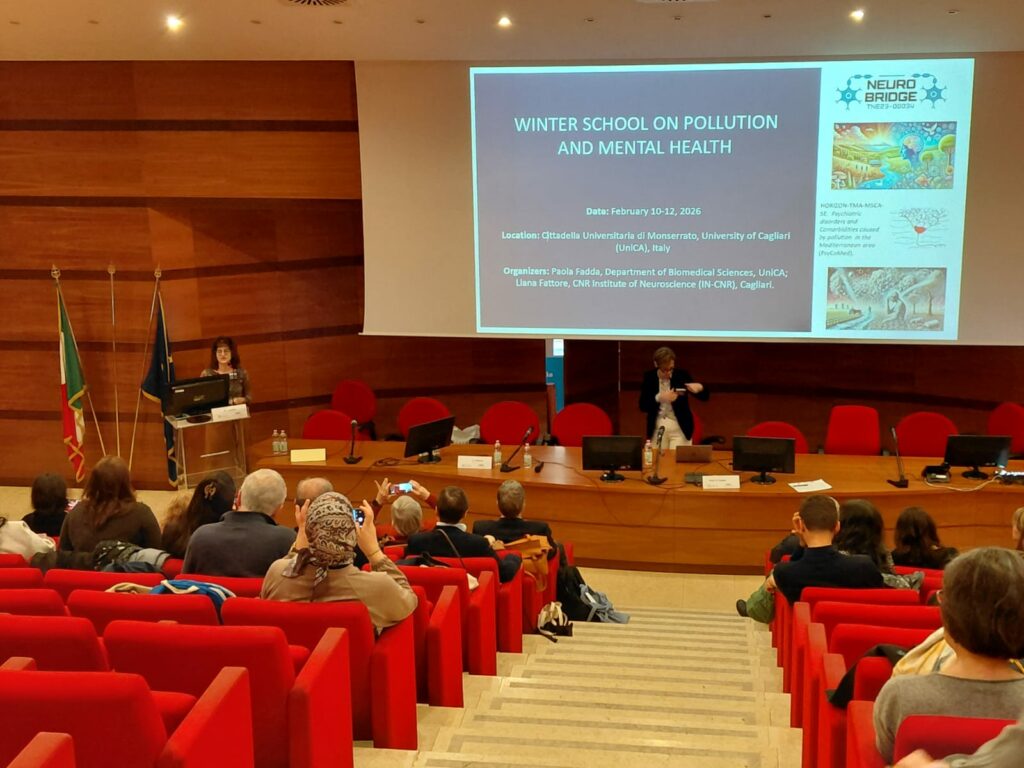
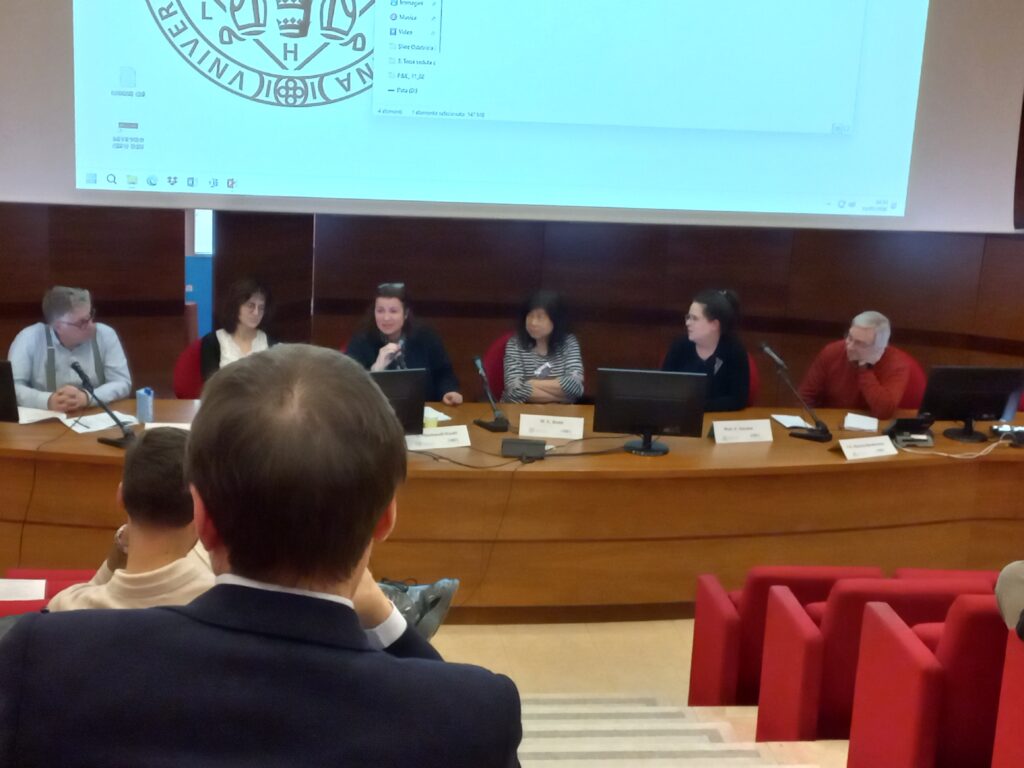
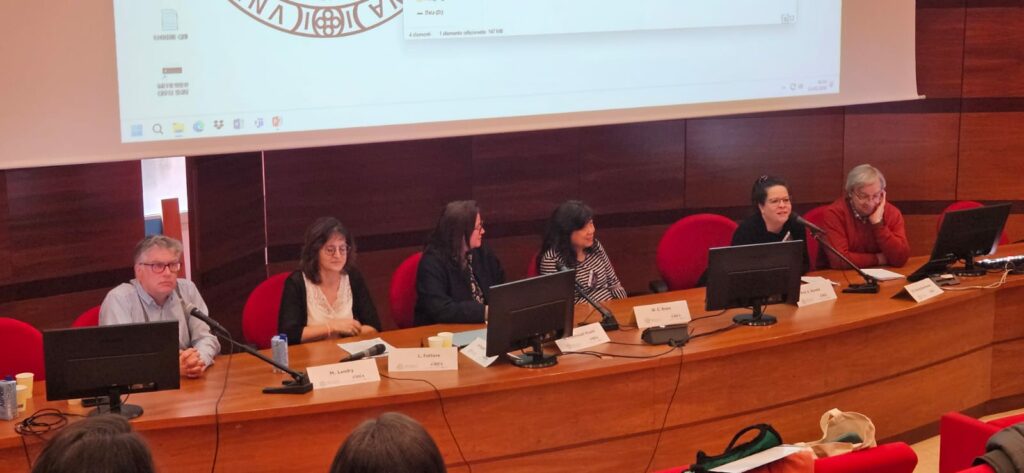

From February 10th to February 12th, we had the great pleasure to be part of the Winter School on Pollution and Mental Health held at the University of Cagliari (Italy), funded by the Neurobridge Initiative.
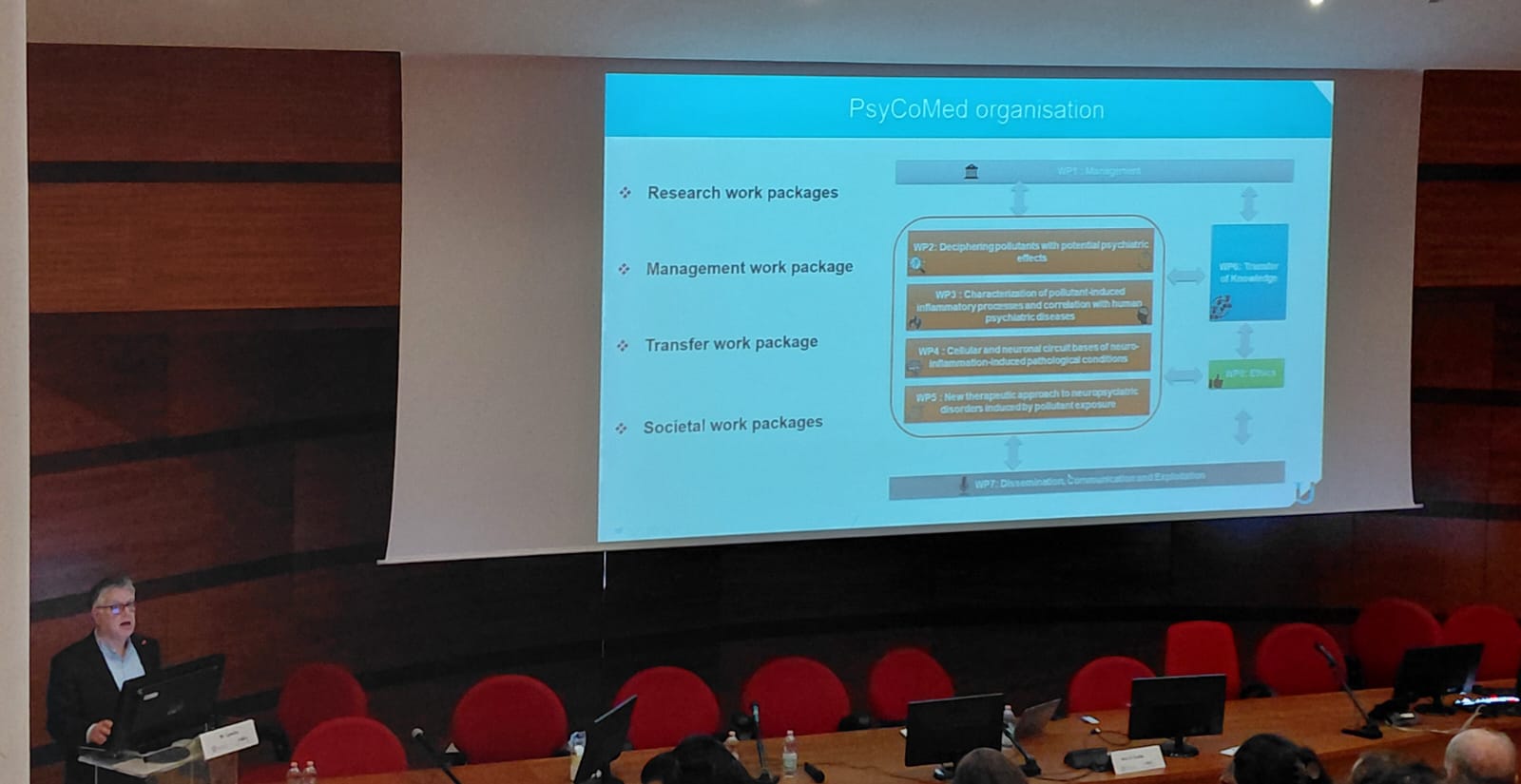
This school gathered many PsyCoMed researchers who gave instructive and inspiring talks:
- Marc LANDRY, University of Bordeaux: « The PsyCoMed project – Psychiatric disorders and comorbidities caused by pollution »
- Francisco E. OLUCHA BORDONAU, Universitat Jaume I: « How pollutants can get the brain during development and adulthood »
- Wah Chin BOON, Florey Institute Melbourne: « Pollutant chemicals and neurodevelopment »
- Olfa MASMOUDI-KOUKI, University of Tunis: « How PACAP protects the brain from glyphosate and nanoplastic toxicity: effects neural cells differentiation, neuroinflammation, oxidative damage, epigenetic changes, and microbiota balance »
- Mónica NAVARRO-SANCHEZ, Universitat Jaume I: « Chemical and behavioral impact of nanoplastics after maternal exposure »
- Mariem SALLEMI, University of Tunis: « Effects of prenatal exposure to nanoplastic on metabolism and neuroendocrine regulation: potential protective action of the neuropeptide ODN »
- Stefano MORARA, IN-CNR : « What zebrafish can tell us about the central effects of exposure to microplastics »
- Jacques NOEL, CNRS: « The impact of a combination of nanoplastics and DEHP on health and pain sensitivity »
- Sandra SANCHEZ, University of Bordeaux: « Neuroinflammation as a mechanisticlink between ADHD and pain sensitization: evidence from anterior cingulate cortex dysfunction »
We also had the pleasure to hear from other researchers who gave very qualitative presentations:
- Ankit SIWACH, UniCA: « Exploring neuroinflammation and peripheral oxidative stress in adult rats prenatally and/or perinatally exposed to nanoplastics »
- Petra AMCHIVA, Masaryk University: « Synthetic food dyes and neurobehavioral effects in children: a focus on autism spectrum disorder »
- Maria Antonietta CASU, IFT-CNR: « Effects of nanoplastic exposure on brain function and behavior in Drosophila melanogaster, with a focus on a Drosophila model of Parkinson’s disease »
- Irene COSTANTINI, University of Florence: « Emerging methods and imaging techniques to explore the neurotoxic effects of microplastics in honeybee brain »
Finally, two hands-on workshops were proposed with practical sessions:
- AI tools with Deep-Lab-Cut and SIMBA to study the impact of pollutants on behavior
- Molecular docking: predicting how a pollutant molecule (ligand) will fit and bind to a biological target
Overall, this school was very successful in giving an overview on the current state of research in the field of environmental pollution and brain functions.
We would like to give our special thanks to Paola Fadda from UniCa, and Liana Fattore from IN-CNR, for the organisation of this excellent event.
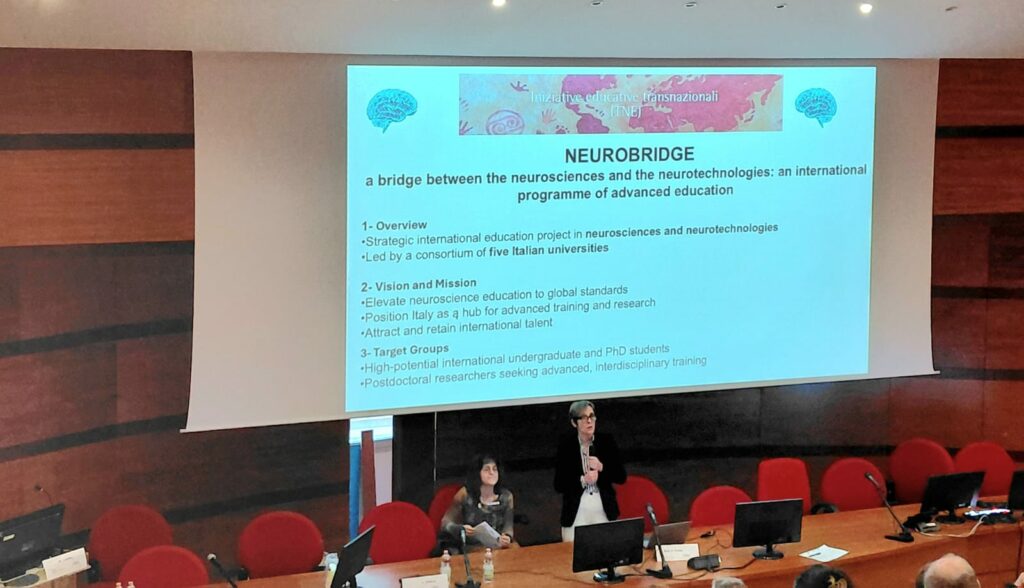
This event was sponsored and funded by NEUROBRIDGE (TNE-2300034). NEUROBRIDGE is funded by the Italian National Recovery and Resilience Plan, under the measure « Transnational Education Initiatives ». The TNE initiatives have the general aim of promoting cooperation with universities abroad in order to incentivise the internationalisation of the Italian universities and to promote the model of Italian higher education as a best practice at international level. NEUROBRIDGE is a collaborative project led by five Italian universities, dedicated to the promotion of education in the field of the neurosciences and neurotechnologies. It is dedicated to international students pursuing their undergraduate and Ph.D. studies, or to international postdoctoral researchers willing to improve their skills.
If you wish to know more click here to visit NEUROBRIDGE website